GST Notice 2026: What Businesses Should Do After Receiving a GST Notice
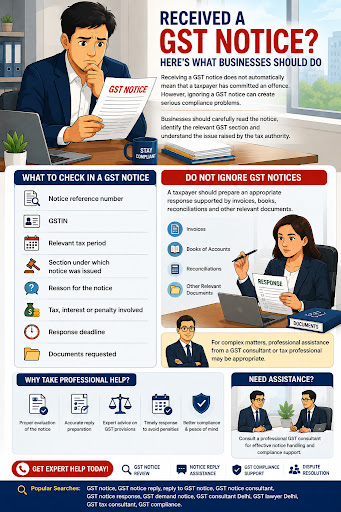
Receiving a GST notice does not automatically mean that a taxpayer has violated GST law. However, ignoring a notice or missing the prescribed response deadline can lead to further compliance issues, including demand, interest or penalty, depending on the facts of the case.
Businesses should carefully read the notice and understand why it was issued, which tax period it covers and what information or documents are required before preparing a response.
What to Check in a GST Notice
Before replying, verify:
- Notice reference number and date
- GSTIN and taxpayer details
- Relevant financial/tax period
- Section or provision under which notice is issued
- Reason and issue raised by the department
- Tax, interest or penalty involved, if any
- Response or hearing deadline
- Documents and information requested
How to Reply to a GST Notice
A proper response should address each point raised in the notice and, wherever required, be supported by GST returns, invoices, books of accounts, payment records, reconciliations and other relevant documents. Avoid submitting incomplete or unsupported information.
Businesses should also maintain a copy of the notice, reply, supporting documents and acknowledgement for future reference.
Don't Ignore GST Notices
Timely review and appropriate response can help businesses manage GST disputes and avoid unnecessary compliance problems. Please contact us feel free.