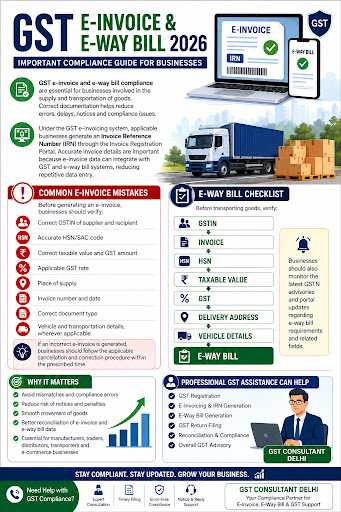
GST E-Invoice & E-Way Bill 2026: Important Compliance Guide
GST e-invoice and e-way bill compliance are essential for businesses involved in the supply and transportation of goods. Correct documentation helps reduce errors, delays, notices and compliance issues.
Under the GST e-invoicing system, applicable businesses generate an Invoice Reference Number (IRN) through the Invoice Registration Portal. Accurate invoice details are important because e-invoice data can integrate with GST and e-way bill systems, reducing repetitive data entry.
Common E-Invoice Mistakes
Before generating an e-invoice, businesses should verify:
- Correct GSTIN of supplier and recipient
- Accurate HSN/SAC code
- Correct taxable value and GST amount
- Applicable GST rate
- Place of supply
- Invoice number and date
- Correct document type
- Vehicle and transportation details, wherever applicable
If an incorrect e-invoice is generated, businesses should follow the applicable cancellation and correction procedure within the prescribed time.
E-Way Bill Checklist
Before transporting goods, verify:
GSTIN → Invoice → HSN → Taxable Value → GST → Delivery Address → Vehicle Details → E-Way Bill
Businesses should also monitor the latest GSTN advisories and portal updates regarding e-way bill requirements and related fields.
Proper e-invoice and e-way bill reconciliation is especially important for manufacturers, traders, distributors, transporters and e-commerce businesses.