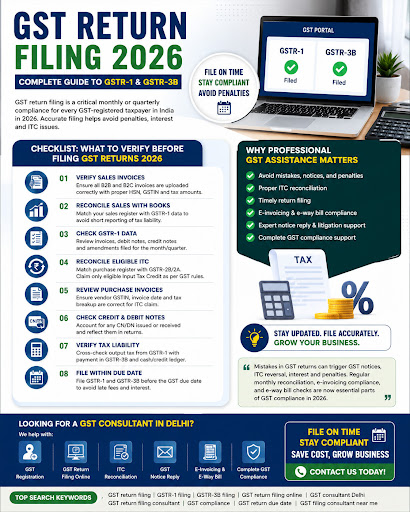
GST Return Filing 2026: Complete Guide to GSTR-1 & GSTR-3B
GST return filing is an essential compliance requirement for registered taxpayers in India. Whether you are a trader, manufacturer, service provider, transporter, e-commerce seller or small business, timely filing helps reduce the risk of notices, interest, penalties and ITC-related issues.
Before filing GSTR-1 and GSTR-3B, businesses should reconcile sales, purchases, invoices, tax liability and Input Tax Credit (ITC).
Key Checks Before Filing
- Verify sales invoices, GSTIN, HSN/SAC and tax amounts.
- Reconcile sales in books with GSTR-1.
- Review B2B/B2C invoices, debit notes, credit notes and amendments.
- Reconcile eligible ITC with purchase records and GST data.
- Check purchase invoices, GST rates and tax amounts.
- Verify output tax liability and payment details.
- Check e-invoice and e-way bill details where applicable.
- File the applicable GST return within the prescribed due date.
Why Professional GST Assistance Matters
GST errors can result in notices, ITC reversals, interest, penalties and compliance problems. Regular reconciliation and timely filing help businesses stay compliant.
Looking for a GST consultant in Delhi? Professional assistance can help with GST registration, online return filing, GSTR-1, GSTR-3B, ITC reconciliation, GST notices, e-invoicing, e-way bills and GST compliance.
Stay updated with GST return filing rules in 2026 and keep your business compliant.